Concrete Pool Decks
Safe, slip-resistant pool decks that stay cool and look beautiful for decades.
Why Concrete is Perfect for Pool Decks
Your pool deck needs to handle some tough conditions. It gets soaked with water constantly, sits under Florida's intense sun all day, and sees bare feet, pool furniture, and sometimes heavy equipment. The material you choose for your pool deck needs to excel in all these situations while looking great and keeping your family safe.
Concrete checks all these boxes better than other pool deck materials. It's naturally slip-resistant when textured properly, stays cooler than pavers or stone, and can be finished in countless ways to match your style. Unlike wood decks that rot, warp, and splinter, or pavers that shift and grow algae in the joints, concrete stays solid and stable year after year.
Safety is the top priority around pools. Properly finished concrete provides excellent traction even when wet. We can create textured surfaces that prevent slips without being uncomfortable on bare feet. The surface can also slope slightly away from the pool to direct water toward drains, preventing puddles where people could slip or where mosquitoes might breed.
Maintenance is another huge advantage of concrete pool decks. You won't spend weekends scrubbing algae from grout lines or replacing rotted boards. A simple hosing down and occasional pressure washing keeps concrete looking fresh. If you seal your pool deck every few years, it resists stains and stays even easier to clean. This means more time enjoying your pool and less time maintaining the area around it. When you're ready to create the perfect backyard oasis, our patio installation services can complement your pool deck beautifully.
Design Options for Your Pool Deck
Gone are the days when concrete pool decks had to be plain gray slabs. Modern techniques let you create stunning pool surrounds that rival or exceed the beauty of any other material:
Surface Finishes and Textures
- Brushed or broom finish: Classic texture that provides good traction and looks clean and timeless
- Exposed aggregate: Reveals beautiful stones in the concrete for texture, traction, and visual appeal
- Stamped patterns: Create the look of travertine, slate, or natural stone at a fraction of the cost
- Spray knockdown: Creates a textured, slip-resistant surface with an attractive finish
- Salt finish: Unique texture created by embedding rock salt that dissolves away, leaving a pitted surface
Color and Style Options
You can color your pool deck using integral color, acid stains, or color hardeners. Popular choices for pool decks include cool tones like gray, tan, and sandstone that reflect rather than absorb heat. You can also combine multiple colors to create borders, bands, or patterns that define different zones around your pool. Some homeowners choose lighter colors near the pool edge and transition to darker tones farther away, creating visual depth and making the pool area feel larger.
Additional Features
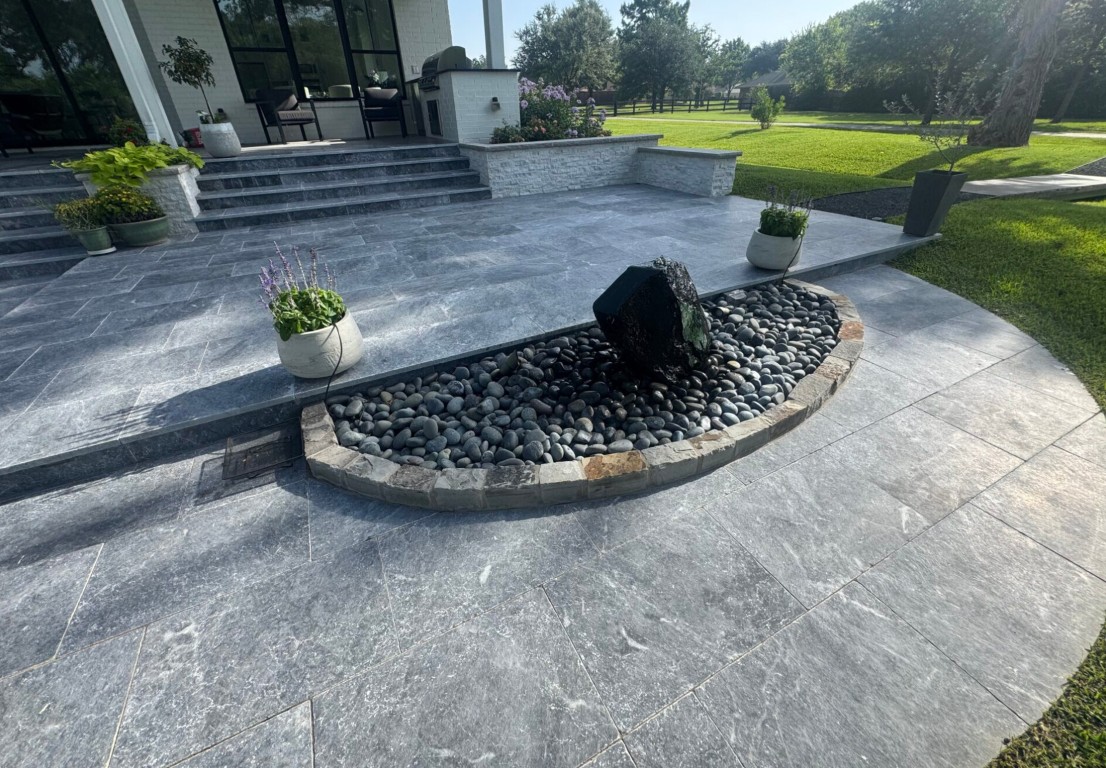
We can integrate other elements into your pool deck design including built-in planters, seating walls, fire features, or outdoor kitchens. Curved edges and radius work create flowing, organic shapes that soften the angular lines of the pool. Steps, landings, and multi-level decks add dimension and help blend the pool area with the rest of your landscape. The possibilities are limited only by your imagination and budget.
Building Your Pool Deck the Right Way
Pool decks require special construction techniques to ensure they remain level, drain properly, and last for decades in the wet environment around your pool:
Planning and Layout
We start by planning the deck dimensions and layout. Most building codes require at least 4 feet of decking around the entire pool, though many homeowners want more space for lounging and entertaining. We'll discuss how you plan to use the space and recommend proportions that look good and function well. We also plan drainage slopes and identify where water should flow to prevent pooling.
Base Preparation and Expansion Joints
The ground around pools often settles as backfill compacts over time. We make sure the base is properly compacted and stable before pouring concrete. We also install expansion joints between the pool coping and deck. This allows the deck to expand and contract with temperature changes without putting pressure on the pool structure. Proper joints prevent cracking and protect both your deck and pool.
Proper Slope and Drainage
Your pool deck should slope away from the pool at about 1/4 inch per foot. This seems minor but it makes a huge difference in how water drains. We use laser levels and careful screeding to establish the right slopes. Water should flow toward drains or landscaped areas, never toward your home's foundation or into areas where it will pool. Good drainage prevents slip hazards and extends the life of your deck.
Finishing for Safety and Comfort
The surface texture makes or breaks a pool deck. Too smooth and it becomes dangerously slippery when wet. Too rough and it's uncomfortable for bare feet and difficult to clean. We create the right balance, providing excellent traction while remaining comfortable to walk on. We also avoid dark colors that absorb heat and can become too hot to walk on during summer afternoons. For enhanced visual appeal, consider our decorative concrete options that combine safety with stunning aesthetics.
Caring for Your Concrete Pool Deck
Concrete pool decks need minimal maintenance, but a little care keeps them looking and performing their best:
Regular cleaning is simple. Rinse your pool deck with a hose to remove dirt, leaves, and pool chemicals. A few times a year, use a pressure washer or stiff brush with mild detergent for deeper cleaning. Avoid harsh chemicals or acidic cleaners that could damage the concrete or sealer. If you notice any mildew or algae growth in shaded areas, a diluted bleach solution will take care of it.
Sealing your pool deck protects the surface and makes maintenance easier. A good sealer prevents stains from sunscreen, pool chemicals, and food. It also helps maintain the color if you've chosen colored concrete. Apply sealer when the deck is new, then reapply every 2 to 3 years depending on wear and sun exposure. The sealing process is quick and can be done in an afternoon.
Watch for any cracks and address them promptly. Small cracks can be filled with concrete crack filler to prevent water infiltration and further damage. If you notice any settling or uneven areas, we can assess whether leveling is needed. Catching small problems early prevents them from becoming expensive repairs.
Keep pool furniture pads in good condition. Plastic or rubber feet on furniture can leave marks on sealed concrete. Use furniture pads designed for outdoor use, and check them regularly for wear. Move planters and heavy items occasionally to prevent staining underneath. These simple steps keep your pool deck looking pristine year after year, creating a resort-like atmosphere in your own backyard.