Concrete Steps & Stairs
Safe, durable steps built to code that provide secure access for decades without maintenance.
Why Concrete Steps Make Sense
Steps and stairs are high-traffic, high-stress areas that need to be safe, stable, and built to last. Whether it's your front entrance, back door access, or steps leading to a raised patio, these transitions see constant use in all weather conditions. The material and construction quality matter tremendously.
Concrete is the superior choice for outdoor steps in Florida. Wood steps rot, warp, and become dangerously slippery when wet. Precast concrete units can shift and settle over time, creating uneven risers that are tripping hazards. Poured-in-place concrete steps become a permanent, solid part of your property that won't rot, rust, or fall apart. They handle our humidity, heavy rains, and intense sun without deteriorating.
Safety is the number one priority with any stairs. Concrete steps can be built with precise, uniform riser heights and tread depths that meet building codes and feel natural to walk on. We create surfaces with proper traction to prevent slips, even when wet. The solid construction means no wobbling, flexing, or bouncing that can throw off your balance. Proper lighting can be integrated, and handrails can be securely anchored into the concrete for maximum stability.
Durability and low maintenance are huge advantages. Your concrete steps will still be solid and functional 30 years from now with no structural repairs needed. You won't be replacing rotted wood, repainting, or worrying about collapse. An occasional cleaning is all the maintenance required. This permanence and reliability make concrete steps an excellent long-term investment in your property.
Building Steps the Right Way
Concrete steps require precision and expertise to build correctly. The measurements, reinforcement, and construction techniques all affect safety and longevity:
Proper Proportions and Code Compliance
Building codes specify requirements for step dimensions because these affect safety. Riser height (the vertical part) typically needs to be between 4 and 7.75 inches, with all risers in a flight being within 3/8 inch of each other in height. Tread depth (the horizontal part you step on) needs to be at least 10 inches. The math formula is simple: twice the riser height plus the tread depth should equal 24 to 25 inches. This creates steps that feel natural and safe to climb.
We calculate the exact dimensions for your specific situation based on the total height change. We never force awkward proportions just to use a certain number of steps. If the math doesn't work out to safe, comfortable dimensions, we adjust the landing elevations or the number of steps to get it right. This attention to proper proportions prevents the too-steep or too-shallow steps that feel awkward and dangerous.
Foundation and Support
Steps need a solid foundation that won't settle or shift. We excavate below frost depth and pour footings that support the entire structure. The steps are integrated with these footings so everything moves as one unit if any settling occurs. This prevents the individual steps from separating or becoming uneven. For steps attached to buildings, we properly connect them to the foundation while allowing for independent movement.
Reinforcement and Drainage
Steel reinforcing bar is essential in concrete steps. The rebar handles tensile stresses that concrete alone can't resist, preventing cracking and structural failure. We place rebar strategically throughout the steps according to engineering requirements. We also plan for drainage so water flows off the steps rather than pooling. This usually means sloping treads slightly forward and ensuring water doesn't get trapped between the steps and the building.
Design Options for Concrete Steps
Concrete steps don't have to be plain or industrial looking. We can create steps that enhance your home's entrance and architectural style:
- Curved or radius steps: Soften the entrance with graceful curves that create a welcoming appearance
- Wide landings: Generous landing areas provide space for planters, seating, or just a more impressive entrance
- Integrated planters: Built-in planters on either side frame the steps with greenery
- Decorative finishes: Stamped patterns, exposed aggregate, or smooth finishes to match your style
- Colored concrete: Integral color or staining creates steps that coordinate with your home
- Contrasting borders: Different colors or textures on the tread edges improve visibility and safety
Handrails are required by code for steps with more than three risers, and we can help you choose and install options that are both functional and attractive. Wall-mounted rails, freestanding posts, or decorative iron railings all work with concrete steps. The anchoring into concrete provides rock-solid stability that wall-mounted rails on wood or vinyl siding can't match. If you're also updating your front entrance, consider how your steps might integrate with a new patio or walkway to create a cohesive design.
Common Step Applications
We build concrete steps for various locations and purposes around Hollywood properties:
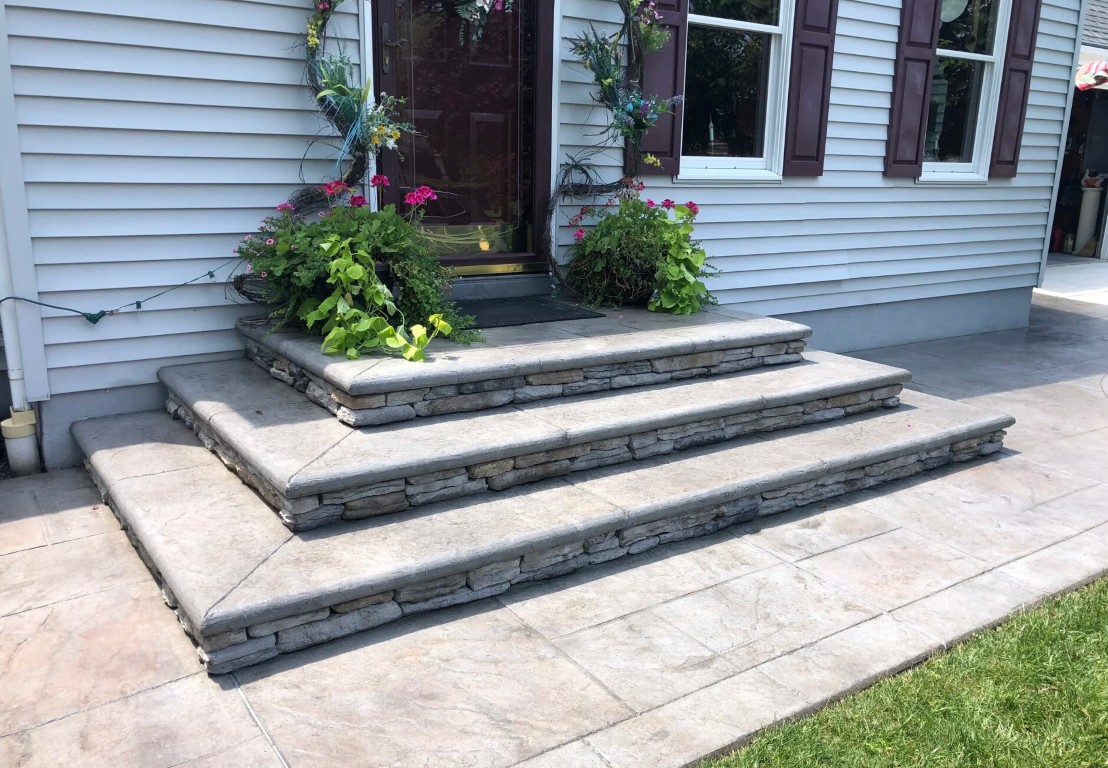
Front entrance steps: These create your home's first impression and need to be both attractive and safe. We can match the style to your home's architecture, whether that's clean modern lines, traditional proportions, or decorative Mediterranean style. Wide steps with generous landings create a welcoming entrance that feels substantial and permanent.
Back door and patio access: Functional steps that provide safe access from your home to the yard or patio level. These might be simpler in design but still need proper construction and code compliance. We can integrate them seamlessly with your patio or deck for a cohesive look.
Garage and side entrances: Utilitarian access points that still need to be safe and durable. Proper lighting and handrails are especially important for these secondary entrances that might not be as well-lit as the front door.
Terraced landscaping: Steps that transition between different levels in your yard. These can be formal or informal, wide or narrow, depending on your landscape design. They provide access while also becoming attractive features in the overall landscape.
Commercial entrances: Business entrances need to meet ADA accessibility requirements while handling high foot traffic. We build steps with proper dimensions, landings, and handrails that comply with commercial codes. The appearance needs to be professional and inviting while prioritizing safety and durability. For complete commercial concrete solutions, check out our full range of commercial services.